

People are always asking me what I’m reading.
Because I think and talk and read about investing all day long, I typically don’t read financial or business books in my spare time. When I’m not working, I read classic fiction, history, books about art, or any book that just looks good — so long as it has nothing to do with investing. Lately, though, so many good business and financial books have been coming out that I’ve been reading a bunch of them, and I’ve at least skimmed everything in my growing pile.
If you want to bring a few serious books with you to the beach or the mountains this summer, you might find my list useful. (Note: You don’t need me to provide a list of lite, escapist reading like thrillers, mysteries, romance or science fiction. The following list is in no particular order and also includes the non-business books I’ve read in recent months.)
Key:
Nerd quotient: 🤓🤓🤓 for the most serious readers; 🤓🤓 moderately intense; 🤓 easily accessible.
Progress report: ✅ I’ve read the entire book. 👍 I’ve read enough of it to recommend it. 🔎 I’ve skimmed it and plan to finish it soon.
✅🤓 Victoria Johnson, Glorious Country: How the Artist Frederic Church Brought the World to America and America to the World. I loved this historical biography of America’s greatest landscape painter, and not just because I have an intense personal interest in Church. Johnson’s writing is luminously beautiful, her assiduous research never impedes the narrative, and the illustrations are spectacular. She takes us back to the 1850s and 1860s, capturing the thrill that viewers felt when a major painting was publicly exhibited for the first time: It was a cultural phenomenon, much like a Taylor Swift tour or the debut of a blockbuster movie today. Church’s paintings of Niagara Falls and the pristine American wilderness, volcanos and jungles in Latin America, icebergs in the Arctic, and the deserts and archeological splendor of the Middle East were the only way many people in his time could ever encounter these sights. Along with Mark Twain, Church was one of 19th-century America’s most intrepid globetrotters, and Johnson follows him everywhere.


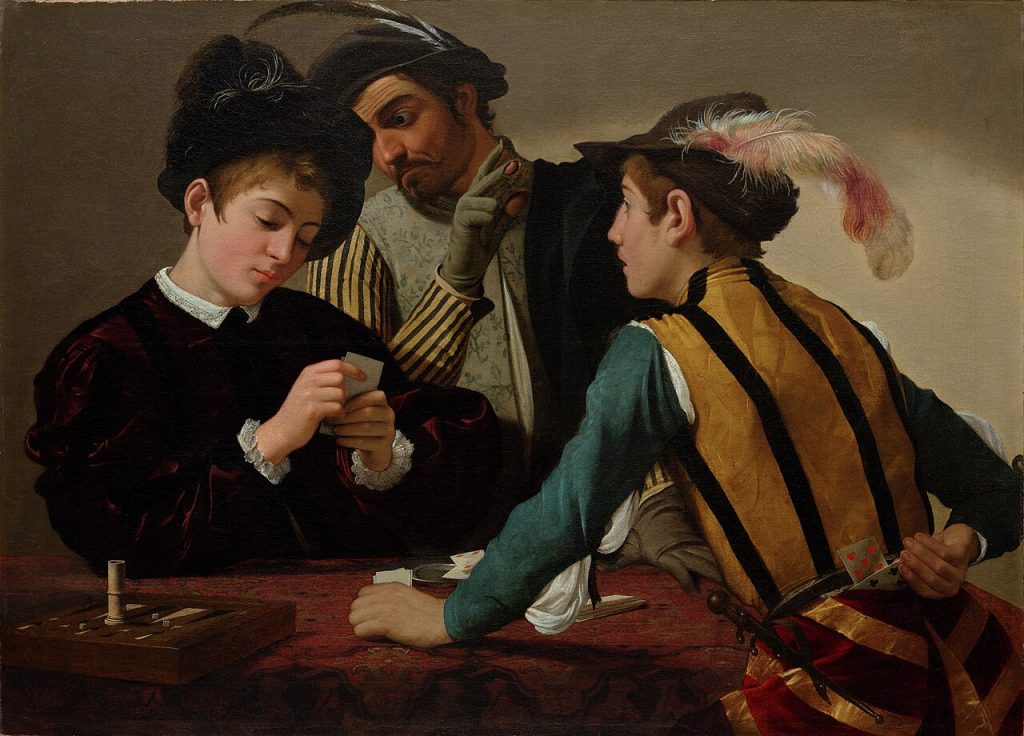
✅🤓🤓🤓 Nicholas Scott Baker, In Fortune’s Theater: Financial Risk and the Future in Renaissance Italy. Baker analyzes how the rise of banking and insurance in 15th and 16th century Italy transformed beliefs about time, risk, and luck. Medieval Catholic ideas about the inevitability of divine providence gradually yielded to rough estimates of probability; gamblers bet on everything from card games to the gender of an unborn child; merchants came to see fate and fortune not as destinies determined solely by God, but as forces that humans could partly control with planning and prudence. Baker meticulously traces these changes as they materialized in art, literature, and the ledgers and letters of Italian merchants. By opening people’s minds and widening the scope of human control, these developments helped lay the groundwork for the rise of capitalism in Europe.
_Kimbell_Art_Museum.jpg)
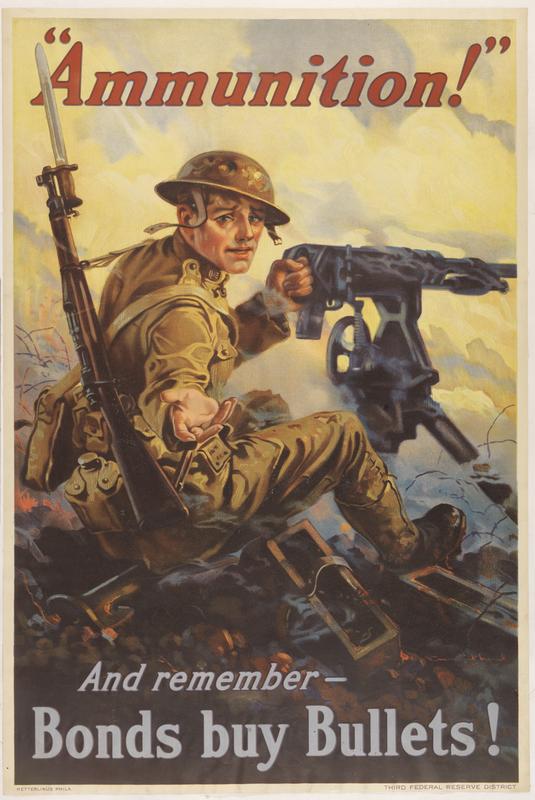
✅🤓Robin Wigglesworth, A Fabulous Debt: The Epic Story of How Bonds Built the Modern World. Yes, a book about the history of the bond market can be entertaining and enlightening. Wigglesworth takes a panoramic, almost cinematic approach, finding the tension and drama in episodes where bonds helped shape the course of history: The Dutch used bonds to prevent their low-lying country from being permanently saturated by the North Sea, and Great Britain used them to weaken Napoleon (prompting France to arrange the Louisiana Purchase, which the U.S. itself financed with bonds). During World War I, savers could buy Liberty Bonds in tiny bites using 25-cent “thrift stamps,” helping to fund the U.S. expeditionary forces in Europe. Bonds also funded manias and scams. As Wigglesworth warns: “Fixed-income securities may in theory be steadier than stocks, but they can prove just as dangerous when insanity strikes, and even more so when bonds are treated almost like money and therefore used unthinkingly as collateral for loans and other financial transactions.” Couple this book with Edward Chancellor’s also excellent The Price of Time: The Real Story of Interest, published in 2022, and you can learn most of what you need to think intelligently about bonds.
👍🤓 Carl Richards, Your Money: Reimagining Wealth in 101 Simple Sketches. In deceptively whimsical line drawings, Richards condenses complex financial questions into stark, simple choices. As I’ve often written, money isn’t really about numbers; it’s about emotion. Richards surfaces the feelings embedded in so many of the financial choices of daily life. His sketches are often little more than scribbled boxes, circles, and arrows, but many will make you smile, some will make you laugh, and all will make you think. The text that accompanies each sketch on a facing page is equally simple and direct.
✅🤓 Jonathan Clements, Money and Me. I wrote the foreword for this posthumous book by The Wall Street Journal’s former personal-finance columnist, who died of cancer last September. In simple, crystalline prose, Clements shares a lifetime of wisdom on using money to buy happiness, counteracting the behavioral quirks that bedevil our financial decisions, and making family and friends an integral part of our wealth. His composure in the face of bad news is remarkable: “How would you change your life if you knew you had just a year or two to live? I’m getting the chance to answer that question, and I consider it a great privilege.” With calm and humor even under the shadow of his terminal diagnosis, Clements meditates on how to use money to achieve the greatest amount of joy and the fewest regrets.
👍🤓Alex Edmans, The Madness of Markets: Why Smart Investors Make Crazy Decisions and How to Exploit Them. Edmans, a finance professor at London Business School, is a sports fan and former chess champion whose curiosity ranges widely across markets. He’s studied how World Cup soccer results and the popularity of particular songs affect stock returns, why CEOs get paid so much, and whether ESG (a/k/a socially responsible) investing matters. He’s also an entertaining writer: “There’s an old line that the stock market is a device for transferring money from the impatient to the patient. This research updates that slightly. It also transfers money from single men to pretty much everyone else.” Edmans summarizes the field of behavioral finance research with a refreshingly light touch. I’m not positive you can use this book to exploit other people’s errors, but you should be able to use it to mitigate your own.
✅🤓 G.K. Chesterton, The Father Brown Stories. Chesterton (1874-1936) wrote some of the most beautiful prose in the English language. The best of his detective stories feature a Catholic priest who solves crimes and mysteries with his spiritual insight, all told with the British love of eccentricity, fabulous flashes of imagination, deep meditations on human nature, and words that will linger in your mind like music. (“The most incredible thing about miracles is that they happen….Nelson does die in the instant of victory; and a man named Williams does quite accidentally murder a man named Williamson; it sounds like a sort of infanticide. In short, there is in life an element of elfin coincidence which people reckoning on the prosaic may perpetually miss. As it has been well expressed in the paradox of Poe, wisdom should reckon on the unforeseen.”) Most writers of detective stories trick us by withholding or muddling the one clue that explains everything; Chesterton is so fun that you won’t even care. I read some of these stories almost every year, to sharpen my ear and clear my mind.
✅🤓 Joseph Moore, How to Get Rich in American History. A mashup of a memoir, a self-help book, a personal-finance guide, a serious and startling social history of wealth, and a standup comedy routine, this is one of the funniest financial books I’ve ever read, not far behind Fred Schwed Jr.’s classic Where Are the Customers’ Yachts? Like a magpie, Moore gathers shiny tidbits: Wood supplied 10% of home heating into the 1940s! A third of U.S. families used to take in boarders! And he clobbers the intellectuals who claim the American dream of a better life is dead; he calls them “Big Woe.” I learned a lot and LOL’d a lot reading this book. I also disagreed with it a lot. To get rich, argues Moore, you should bet everything on starting your own business. If it fails, try again; if it succeeds, then (and only then) diversify into stocks and bonds. Like Roger Lowenstein, who reviewed this book for the WSJ, I think this is bad advice. But the book is like a history-themed Trivia Night at a lively bar, with the bartender pumping laughing gas into the room. Read it for fun. Just don’t take Moore’s advice too seriously; you might go broke instead of getting rich.
✅🤓 Barry Ritholtz, How Not to Invest. The late Charlie Munger liked to advise investors to “invert, always invert.” The best way to figure out how you can succeed, Munger argued, was to figure out how other people have failed. Ritholtz does exactly that, running through such surefire ways to wreck your wealth as ignoring taxes, paying excessive fees, misinterpreting data, overreacting to short-term trends, and trading too much. One way investors fail, writes Ritholtz, is by failing to understand how the odds of outperformance get longer as you add more layers:
“Stocks: You must pick the stocks that beat the market.
Mutual funds: You must pick the guy that picks the stocks that beat the market.
Hedge funds: You must pick the guy that picks the trader that picks the stocks that beat the market.
Fund of funds: You must pick the guy that picks the guys that pick the traders that pick the stocks that beat the market.”
👍🤓🤓 Aaron Brown, Wrong Number: How to Extract Truth from a Blizzard of Quantitative Disinformation. Brown, a veteran quantitative trader, covers a huge range of statistical illusions, delusions, distortions, and disinformation–in fields ranging from public health to foreign policy, from portfolio management to crime novels. Following along as he picks data fallacies apart is a lot of fun, and I can’t wait to read the whole book.
👍🤓🤓 Nick Chater and George Loewenstein, It’s on You: How Corporations and Behavioral Scientists Have Convinced Us That We’re to Blame for Society’s Deepest Problems. I’ve known Loewenstein, a behavioral economist at Carnegie Mellon University, for decades. He and Chater, a psychologist at Warwick Business School, have written a book aimed straight at the heart of behavioral economics itself. They argue that behavioral economics has documented the ways in which the imperfections and inefficiencies of the human mind can lead us astray. That, in turn, has led to a focus on “individual weakness” rather than “systemic change” like legislation or regulation. (Think of how online sports-gambling companies say they promote “responsible play,” or how prediction markets and brokerage apps claim to encourage “responsible trading,” as if the addiction among many of their users were only a matter of personal choice.) I haven’t finished reading the book yet, but I think the authors might be overstating their case. The chapter on retirement savings glamorizes the defined-benefit pensions that companies offered more widely until the rise of 401(k)s in the 1980s. Chater and Loewenstein overlook that those payouts were often skimpy, most workers were ineligible, and companies that went bust left retirees in the lurch. The 401(k) is far from perfect, but the defined-benefit corporate pension plan was hardly a workers’ paradise. My view: Behavioral economics is no panacea, but it can be an extremely useful tool for individuals and for systems as well.
👍🤓🤓 John Y. Campbell and Tarun Ramadorai, Fixed: Why Personal Finance Is Broken and How to Make It Work for Everyone. This book probably wasn’t intended as a companion to Chater and Loewenstein’s, but it makes a nice counterpoint. It’s a taxonomy of what’s wrong with banking, insurance, borrowing, investing, and other aspects of personal finance. I haven’t read it all, but I’m intrigued to see that in several cases, it offers suggestions for how to fix these problems–for example, by bundling low-cost annuities with long-term care policies, or by consolidating the hodge-podge of government regulatory agencies into “a single agency with broad responsibility for personal finance.” What I really want to read (but suspect isn’t in the book) is how these solutions could ever be implemented in a financial industry that ferociously resists reforms.
✅🤓🤓 Baruch Fischhoff, Decisions: Studying and Supporting People Facing Hard Choices. In this intellectual memoir, Baruch Fischhoff, one of the world’s leading psychologists (and a student of the late Nobel laureate Daniel Kahneman), describes his long experience studying how people assess, communicate, and react to risks. His narrative of the development of decision-making research over the past half-century is rich with personal anecdotes, gentle humor, continuous learning, and profound humility about how prone we all are to misjudge and misunderstand risks.
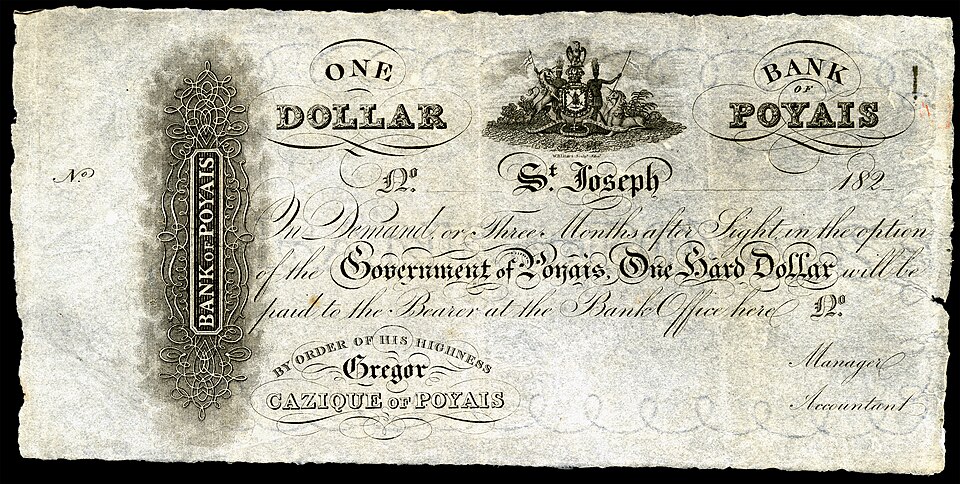
👍🤓🤓🤓 Damian Clavel, Financing Sovereignty: The Poyais Scandal in the Early Nineteenth-Century Atlantic World. In the early 1820s, as a mania for emerging-market investing heated up in London, an adventurer named Gregor MacGregor claimed to have founded a country in Central America named Poyais. He attracted settlers and issued vast quantities of “sovereign” debt until the scheme unraveled. Clavel is the first economic historian to re-examine this tale in detail. I haven’t read it yet, but I’m looking forward to finding out how he adds new evidence and enriches an old story.

✅🤓 Morgan Housel, The Art of Spending Money. Housel, the author of The Psychology of Money, a book I wish I’d written, has written another book I wish I’d written. In pithy chapters and lapidary prose, he avoids schoolmarmish finger-wagging and sweeping generalizations, instead offering sharp advice like this (for someone who has money to spare):
“Within the confines of your budget, experiment with as many types of spending as you can, cutting quickly and without mercy the things that aren’t working for you.
Try spending more than you currently do on food, travel, clothes, sporting events, experiences, whatever it is. But immediately stop if it’s not making you happier, just as if you were reading a bad book.”
👍🤓 Liaquat Ahamed, 1873: The Rothschilds, the First Great Depression, and the Making of the Modern World. Can stocks rise 300% over three years and then lose 45% in a day–and then tread water for nearly two decades? That’s what happened in Vienna, when the stock market fell by almost half in a single day in 1873. Before long, market crashes and deflation swept the globe. Ahamed, the banker and investment manager whose previous book Lords of Finance: The Bankers Who Broke the World covered the crash of 1929, writes well. In his WSJ review of 1873, Jim Grant argued that Ahamed is too critical of the ensuing deflation. As I finish reading, I’ll be curious to see how Ahamed handles the ferment of industry and innovation that followed, including the telephone, incandescent light, the automobile, and the concept of the giant corporation itself. My own theory is that good times foster bad financial ideas, and bad times engender good ones.
✅🤓 Nick Maggiulli, The Wealth Ladder: Proven Strategies for Every Step of Your Financial Life. Maggiulli, who produces the excellent “Of Dollars and Data” blog, takes an original approach to personal finance in this book. He develops simple, clever, quantitative rules of thumb to guide saving, spending, and investing as you progress through different levels of wealth. One I especially like is what he calls the Point Zero One Percent Rule: “The amount you can spend above your income each day while maintaining your wealth is 0.01% (or 1/10,000) of your net worth.”
✅🤓 David Booth, Stay Calm: Learn to Embrace Uncertainty in Investing and Life. The founder of Dimensional Fund Advisors has written a relaxed and friendly book anyone can read in a few sittings. It’s partly a memoir about his early years at the forefront of the index-fund revolution and partly a basic guide to lifelong buy-and-hold investing. It might have worked even better as two separate books, rather than as one short book trying to do two things. But Booth’s writing is soothing, and his overall message — investing is simply a bet on human innovation and progress — is a truism worth repeating. Young people, in particular, might benefit from reading it.
👍🤓 Julie Orringer, The Flight Portfolio. I’m looking forward to reading this novel, which Sam Sacks reviewed ambiguously in the WSJ a few years ago. It’s about Varian Fry, the journalist and international aid worker who raced against time — and often against the wishes of the U.S. government — to rescue Jews and other refugees from the Nazis during World War II. Friends have highly recommended it to me.
✅🤓 Ben Carlson, Risk & Reward: How to Handle Market Volatility and Build Long-Term Wealth. Carlson, author of the aptly named blog A Wealth of Common Sense, brings a similar approach to this book. While much of it might seem familiar to sophisticated readers, Carlson’s clean and clear use of data — both in charts and text — makes basic points memorable. “Investors often compare the stock market to a casino, but that analogy has never made sense to me,” he writes. “In an actual casino the house has the edge, so the longer you play, the higher your probability of losing. The stock market is the opposite.” Over the course of time, he explains, the U.S. stock market has gone up on an average of only 54% of all trading days, “a little better than a coin flip,” but it has gone up in 64% of all months and 79% of all years.